

When Focus Feels Harder Than It Should
Attention is one of the brain's most complex functions. It requires multiple systems working together—filtering distractions, regulating impulses, maintaining awareness, and shifting focus when needed.
For some individuals, these systems operate efficiently and consistently. For others, focus can feel unpredictable. Tasks may take longer than expected, distractions may feel impossible to ignore, and mental energy can be difficult to sustain throughout the day.
These challenges can affect performance at work, school, home, and in relationships.
Understanding Attention Through Brain Activity
Your brain is constantly producing electrical activity in the form of brain waves. Different patterns of brain activity are associated with different mental states, including attention, concentration, relaxation, and sleep.
Research has identified brain wave patterns that are commonly associated with attention-related challenges. qEEG brain mapping allows us to measure these patterns and compare them to broader normative databases, creating a clearer picture of how your brain is functioning.
This process does not diagnose attention disorders, but it can provide valuable insight into patterns that may be contributing to difficulty with focus and concentration.

A Personalized Approach
No two brains are identical.
Some individuals struggle with sustaining attention. Others may have difficulty regulating impulsivity, organizing tasks, or managing mental fatigue. While the symptoms may appear similar, the underlying patterns can be very different.
Rather than relying on a one-size-fits-all approach, neurofeedback training is guided by your unique brain activity and individual goals.
Training Healthier Focus Patterns
Neurofeedback uses real-time feedback to help the brain learn and reinforce healthier patterns of activity.
During training, your brain receives information about its own activity and gradually learns to strengthen patterns associated with improved regulation and attention.
This process is based on neuroplasticity—the brain's natural ability to adapt and change through repetition and feedback.
Over time, training may help support:
-
Sustained attention
-
Mental clarity
-
Reduced distractibility
-
Improved concentration
-
Cognitive endurance
-
Performance under pressure
Start with Brain Mapping
Understanding attention begins with understanding the brain patterns behind it.
A qEEG brain map provides a measurable baseline and helps guide a more personalized approach to neurofeedback training.
Understand your brain before you train it.
Maybe the CTA is a different section...


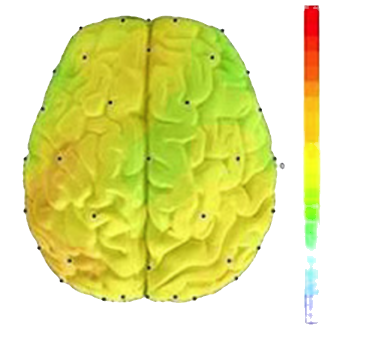
Every brain is different.
Before beginning neurofeedback, we start with qEEG brain mapping to better understand your unique brain activity and guide a personalized training plan.
